
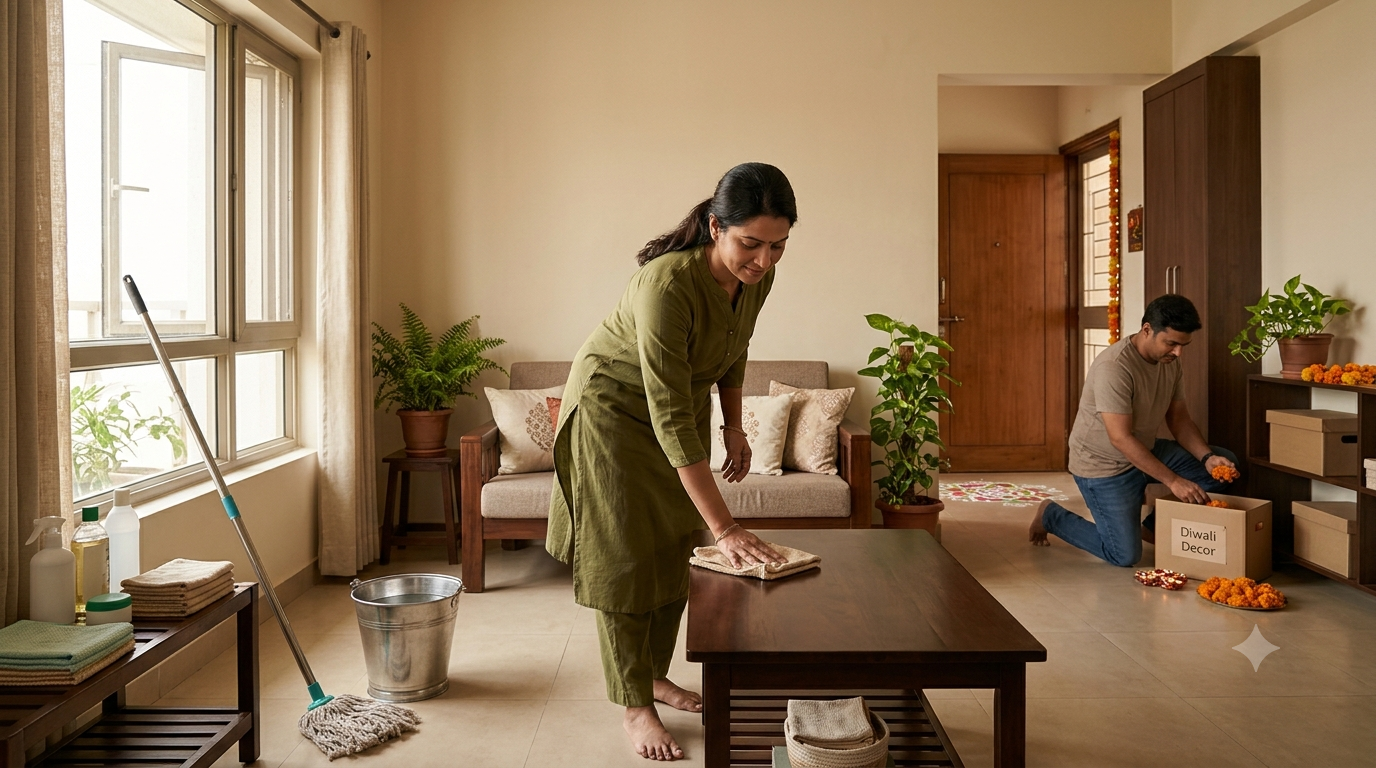
Diwali is a festival of colours and lights and family get togethers and delicious food and beautiful decoration in the Indian houses. But after the celebrations, it’s time to tackle another familiar chore: clean up. Cleaning up after Diwali can be quite a task. There are oil marks from diyas, leftover rangoli colours, dust, food spillage, disposable decorations and packaging waste.
Many homes also use several cleaning products to get their homes back to normal. Cleaning well doesn’t mean you have to use more products. With small habits, clever product choices and consistent upkeep, sometimes cleaning the house can become more manageable.
Where natural and mindful cleaning habits can help. Families can create a cleaner and more comfortable home by selecting the right cleaning products, limiting the use of chemicals and following practical cleaning routines.
Here are five natural cleaning habits . Indian homes can look like this after Diwali and continue through the year.
- Damp dusting instead of dry sweeping
The Diwali celebrations are over, and the dust and particles from the decorations have settled on the furniture, shelves, window sills and floors. Dusting or aggressive sweeping can move dust into the air. A simple alternative is damp dusting.
With a clean, slightly damp microfibre cloth, wipe down surfaces such as tables, shelves, window frames and furniture. Use the right floor cleaner and mop for your floors. You can gather dust, not just move it from one place to another.
The National Center for Disease Control (NCDC) under India’s Ministry of Health and Family Welfare also suggests damp-cloth cleaning as a household precautionary measure in its indoor air quality guidance.
- Pick cleaning products by ingredients, not labels
The buzzword in the household cleaning industry is ‘natural’. But a product labelled natural or eco-friendly is not necessarily safer or more effective.
Real ingredients, formulation, concentration and purpose are important. According to the U.S. Environmental Protection Agency (EPA), natural ingredients can have the same chemical properties and potential effects as ingredients from other sources.
Things to consider before buying a household cleaner: –
– Reading ingredients information if available.
– To verify the objective of the product.
– Choosing products that are suitable for the surface you are cleaning.
– As per the manufacturer’s direction for use and dilution. – Skipping products when all you need is water and a little cleaning.
Households interested in more mindful cleaning options can explore Zerodor CARE B2C ranges, among others, after reviewing the individual product’s formulation and instructions.
- Frequently Clean High-Touch Surfaces
After Diwali families usually clean the floors, the windows, and the places where the decorations are kept. But frequently touched surfaces also need attention. Surfaces that are touched a lot are door handles, light switches, kitchen work tops, fridge handles, dining tables and bathroom taps.
Cleaning these areas can help to remove dirt and germs. For most household cleaning situations in everyday life, cleaning with soap or detergent and water will do the trick. If someone is ill or there is a particular hygiene requirement, disinfection may be required.
This basic routine can comprise:
– Clean kitchen counters after preparing food.
– Frequently touched handles should be cleaned regularly.
– Wipe surfaces before and after eating.
– Cleaning of sanitary equipment according to its purpose. Wash reusable cleaning cloths frequently.
- Improved Cleaning Reduces Indoor Air Pollution
Cleaning is more than just wiping what you can see. Also interesting is how cleaning activities impact the indoor air.
Some members of the household may find cleaning uncomfortable due to strong fragrances, sprays used in excess or inadequate ventilation.
Here are some simple things you can do:
– Open your windows and doors when the weather is good.
– Use home cleaning products in a well-ventilated room.
– Follow the instructions for protective equipment that are supplied with the product.
– Do not dry sweep when wet cleaning is the appropriate method.
The most important thing is not to mix different cleaning agents. Mixing bleach with vinegar, ammonia or other cleaners can create toxic gases. Homemade cleaning mixtures are not immune from this warning either.
However, the assumption that homemade mixes are always safe should be replaced by careful use of products, proper ventilation and safe handling in a naturally inspired cleaning routine.
- Reusable Materials and Proper Disposal for Less Cleaning Waste
Diwali celebrations can create a lot of waste in households such as cardboard boxes, plastic decorations, disposable plates, used cleaning supplies and leftover decorative items. Post festival, households can have a more responsible clean-up instead of just chucking all the stuff away straight away.
Take a look at these habits:
– Use washable microfibre cloths rather than disposable wipes where possible.
– Repurpose storage boxes for holiday decorations and accessories.
– Sort recyclable packaging according to your local waste collection rules.
– Donate usable household goods and decorations when appropriate.
– Dispose of any remaining cleaning chemicals according to label instructions and local guidance.
These small steps could help reduce unnecessary waste and encourage more responsible consumption at home.
Reusable cleaning materials also must be properly washed and dried between uses. Never reuse to the detriment of hygiene. Zerodor CARE B2C is a part of conscious household cleaning. But building better cleaning habits is more than just how much we clean. And it means thinking hard about the products we consume.
Zerodor CARE B2C also offers a household cleaning range for consumers to consider as part of their daily cleaning routines.
For families seeking a more mindful approach, the start can be simple. Just understand product ingredients, check intended applications, follow usage instructions and select products that meet household cleaning requirements. It enables families to see what they’re doing now and make informed changes over time, rather than trying to change everything at once.
Conclusion:
Diwali may be a few days away, but the habits we develop around our homes can last us all year. After the festivities, Indian households can take some practical steps like dusting things gently, choosing products wisely, cleaning surfaces regularly, making sure there is proper ventilation and disposing waste responsibly.
The aim is not to throw away all conventional cleaning products or to assume that anything labelled natural is safe. It’s about making the right choices. It’s about how to clean, what to use and what you buy every day.” Mindful routines and the correct household cleaning products can help families work toward cleaner, more organised and more comfortable living spaces.
A clean house after Diwali is a good beginning. It’s better cleaning habits the rest of the year that make the difference.”